



‘Look, I’m an old dog and you’ve got to teach me some new tricks because it is not like it used to be.’
Jennie Gilbert hears this from experienced leaders more often than you’d think. Corporate executives with impressive résumés walk into her office, admitting they’re struggling. The strategies that made them successful a decade ago just aren’t cutting it.
Gilbert knows what that journey feels like. Twenty years ago, she was a teacher in the U.K. who moved to Calgary and discovered her qualifications didn’t transfer. Instead of seeing it as a setback, she embraced being a student again. She started from scratch in corporate training, delivering one-day time management courses while raising her young family.
“I just kept showing up,” she says.
That willingness to learn, even when you’re experienced, is exactly what Gilbert now teaches as a Leadership Development Specialist at SAIT. She created Leading Beyond Any Title™, a program that helps leaders embrace what she discovered herself: that learning doesn’t stop when you reach the top. In fact, that’s when it becomes most critical.
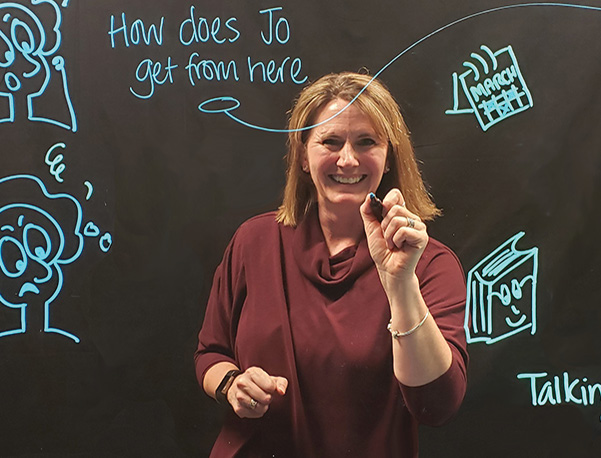
Now, Gilbert works with corporate leaders to tackle the issues that keep them up at night. “I hold a special place for the people who come to me and say, ‘Look, I’m an old dog and you’ve got to teach me some new tricks because it is not like it used to be,’” says Gilbert.
Learning this more human-centered approach to leadership requires that the “old dog” is open to new strategies and willing to put them into practice. Leaders don’t have to erase the old ways. Instead, they layer new knowledge on top of them so they can be applied to everyday interactions with their team. This way, leaders create healthier, more positive workplaces by paying attention to the mental health and well-being of the people behind the job titles.
The Growth of a Program
Gilbert created the Leading Beyond Any Title program in 2022 after the corporate reset brought on by COVID-19. Effective leadership demanded modern strategies that reflected the times.
“What the pandemic gave us was the knowledge that there was no playbook for what was happening. It wasn’t a matter of what to do anymore. It was a matter of how,” says Gilbert.
That realization spurred the department to refresh its approach to leadership programming. Leading Beyond Any Title is anchored by “The Leader in Me,” which helps leaders understand who they are and how they will show up for their teams. Many other programs are based on general traits that leaders are forced into. Gilbert understands that leaders are complex individuals who don’t fit neatly into boxes. Instead, she focuses on a holistic approach drawing from the human side of leadership.
The program transforms leadership education by exploring six intelligences vital in effective leaders: strategic, adaptability, collaborative, social, trust and psychological safety, and emotional intelligence.
Participants build essential skills that help them stay resilient and lead effectively. While the core approach remains the same, the content is updated regularly to reflect what leaders are experiencing at work.
“One of the things we pride ourselves on with Leading Beyond Any Title is that it’s constantly curated to meet people where they’re at but also with what’s coming,” she says. “We’re able to shift and say, ‘here’s the topic of the day, this is what’s going on now.’”
From conversations about “quiet quitting” to recognizing the importance of empathy and emotion in leadership, this program eliminates barriers that hold leaders back. At its core, the goal is to support workplace well-being of both leaders and their teams.
Pushing Through vs. Mental Toughness
It used to be that showing emotion at work was seen as unprofessional and that pushing through without complaint was a sign of competence. A better understanding of mental health over the past decade shifted that mindset. Creating healthier workplace cultures has become paramount and is a key focus in Gilbert’s approach. A healthier model is emerging, where people learn to respond instead of reacting. To be emotionally aware rather than shut down, and to challenge themselves while still recognizing their limits on any given day.
“There are days where I show up with only 60% or 40% energy. I could write that day off or I can say ‘Here’s where I’m at today, and here’s what I can do with what I’ve got.’” She emphasizes that it requires a degree of mental toughness.
“We’re thinking about stress, anxiety (but not clinical anxiety) and, to a degree, fear. And then that whole wonderful piece of self-belief: How do I give myself the dignity that I deserve to show up and make a request? To show up and be assertive?”
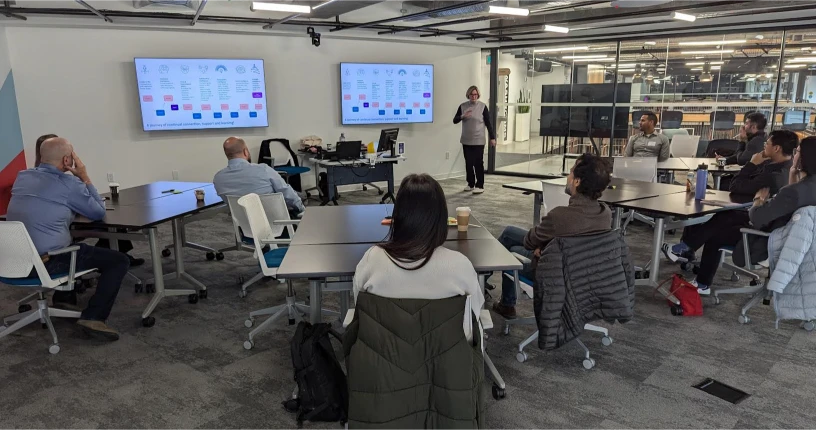
This is a critical lesson for handling rising workplace pressures. Leaders and their teams often feel overwhelmed with the rise in “working leaders” who manage a team while still carrying much of their previous workload. In this environment, people need to move away from reacting on autopilot and instead practice more mindful, deliberate responses to pressure and stress.
Thoughtful responses to stress require mental toughness, something often confused with stoicism or simply “toughing it out.”
“Mental toughness to me is about being able to show up as the best version of yourself at that time with what you’ve got.”
“The ability to push through is often at the expense of yourself or at the expense of relationships or the expense of learning. That’s not an expense that we want to incur,”
True mental toughness helps leaders and their teams stay focused, confident and motivated in the face of challenges. With emotional regulation skills, they can remain calm under pressure, see setbacks as opportunities and then recover more quickly. In the process, performance is redefined, shifting from just results to the behaviours and actions that lead to those outcomes. Building mental toughness increases confidence and resilience while also supporting personal growth and well-being.
However, mental toughness does not remove stress from the workplace. What it does is help people handle it in healthier ways. Leading Beyond Any Title provides practical tools to face challenges directly, reducing the risk of burnout and long-term strain.
“But stress isn’t always the bad guy. There are positive forms of stress, when our body rises to the challenge and we feel it physically, we feel it in our background conversations in our mind, and we’re like, ‘I’m ready for this challenge. Let’s go,’” Gilbert says.
The key is allowing time for the body and mind to recover from stress. People who develop mental toughness also make space to recharge through regular breaks and real downtime. In the past, working through lunch or answering emails after hours was seen as dedication. Now, it’s a warning sign of burnout.
Leadership programs now focus on showing teams that their well-being matters. Leaders can demonstrate this in simple ways by:
• not contacting employees during off hours
• sharing their own vulnerabilities to normalize conversations about mental health
• not rewarding habits like skipping breaks or vacation time.
Even small actions like asking how someone is doing and genuinely listening to the answer can help people feel seen and supported. These everyday behaviours build trust and strengthen psychological safety at work.
Promoting Psychological Safety
For a team to work well, everyone needs to feel safe speaking up, asking for help and challenging ideas without fear of punishment, rejection or ridicule. It’s key that leaders create a space that welcomes diverse perspectives, frames mistakes as learning opportunities and establish an open-door philosophy to encourage people to ask for help.
Simple changes in how leaders ask questions can make a big difference in psychological safety, too. For example, instead of putting someone on the spot with “What action should we take?”, Gilbert suggests asking “How is this issue showing up in your team?” The first question can feel like a test where their answer invites judgement and scrutiny. The second invites them to share their perspective, which feels less vulnerable. Psychological safety grows through everyday behaviours like how leaders show up, how they ask questions and how they run meetings.
The program also highlights the importance of recognizing subtle signs that someone is struggling to speak out or share ideas and step in to help. One way leaders support these team members is by letting them discuss ideas in smaller groups before bringing them to the larger team. This lowers the pressure and helps people feel more confident contributing. These simple steps create more space for everyone’s voice, encourages empathy and leads to more thoughtful, productive conversations.
“How we respond is crucial to whether they’ll speak again or not, so that’s our part in showing that everybody feels significant in the classroom. Everybody feels valued,” she says. Creating a psychologically safe environment helps balance accountability with well-being.
When mental toughness is supported by psychological safety, teams can perform at a high level without burning out. People feel more comfortable speaking up, working through challenges together and contributing their best toward shared goals.
“Fear doesn’t have to be a brake. It doesn’t have to be the gas pedal, that’s not for everybody, but it doesn’t have to be a brake,”
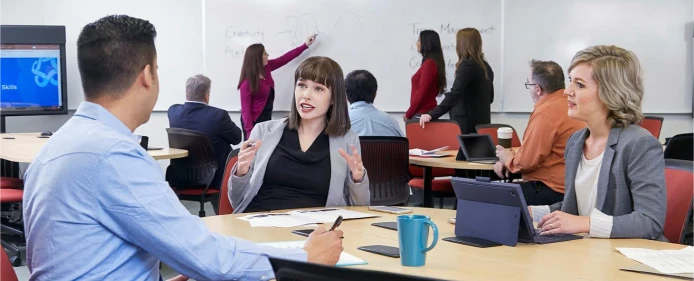
Leadership is a behaviour while “leader” is just a title. You don’t need a formal position to step up to help create a better workplace. What matters is the courage to practice key leadership skills and not letting fear hold you back. Strong leaders learn how to recognize fear and use it in a healthy, productive way.
“Fear doesn’t have to be a brake. It doesn’t have to be the gas pedal, that’s not for everybody, but it doesn’t have to be a brake,” says Gilbert.
When mental health and well-being are priorities, people feel safer taking smart risks and trying new approaches. They can let their foot off the brake knowing they have support if things don’t go perfectly. The result is a workplace where resilience is sustainable, performance is people focused and well-being is seen as a key part of success rather than a barrier to it.
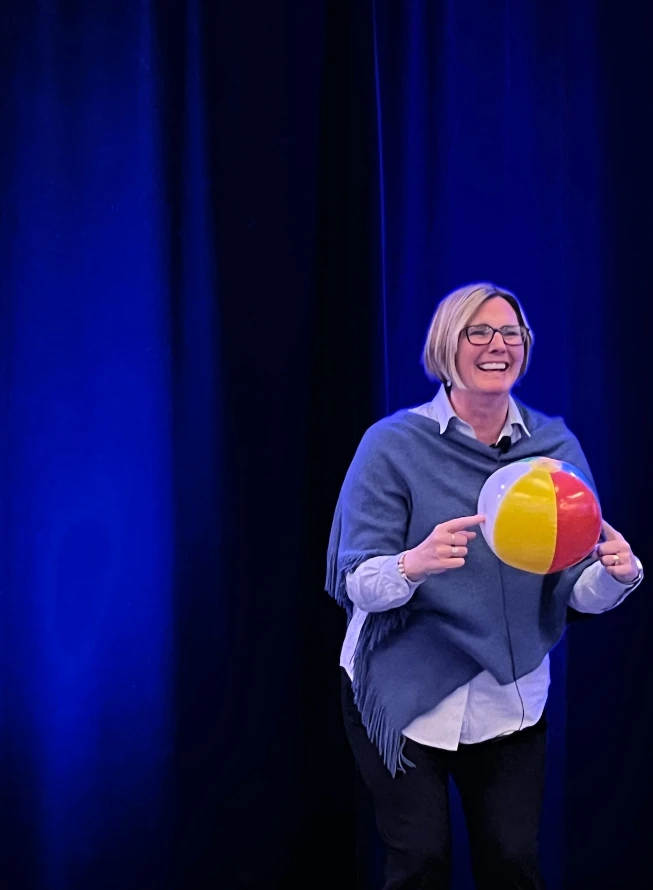
Educational wellness in action
Gilbert’s own journey from starting over in a new country to creating one of SAIT’s signature leadership programs proves the point she makes to every participant: learning doesn’t end when you achieve success. It’s how you sustain it.
Over 12 years of “just showing up,” Gilbert has created courses, taught workshops, launched podcasts and earned the title of Leadership Development Specialist. But the real credential was her willingness to remain a student.
That’s what she asks of the leaders who walk into her programs. Be the “old dog” willing to learn new tricks. Because in a world that won’t stop changing, the most effective leaders aren’t the ones who know everything. They’re the ones still willing to learn.