


We talk a lot about student success.
We talk about grades, attendance, standardized testing, behavior plans and academic outcomes.
But we rarely talk about the one thing that determines whether any of those systems can truly work: a child’s nervous system.
You cannot educate a nervous system that is in survival mode.
Educational wellness is not just about what students know. It is about whether they feel safe enough to think, trust and grow. And today, many classrooms are filled with bright, capable students who are not failing academically—they are surviving emotionally.
As a former police officer and School Resource Officer, I didn’t just meet youth in hallways and classrooms. I met them in crisis. I saw what happens when systems become the first responders instead of the first supporters. And what I learned is most “problem behavior” is not defiance. It is communication.
Educational wellness lives at the intersection of safety and connection. We cannot sacrifice one for the other.
Decoding the behaviour
We have built educational systems that are skilled at responding to disruption but not always at understanding it.
A child who throws a chair is not trying to sabotage learning.
A teen who shuts down is not being uncooperative.
A student who challenges authority is often protecting something vulnerable inside themselves.
Punitive approaches may create short-term compliance, but they rarely create long-term change. They teach students how to avoid consequences, not how to regulate emotions, build trust, or develop resilience. When discipline replaces curiosity, educational wellness deteriorates.
Connection is not the opposite of structure. It is what makes structure effective.
When students feel emotionally safe, accountability becomes something they can hold, rather than something forced upon them.
What report cards don’t show
Some of the greatest barriers to learning never appear in academic data.
Poverty.
Housing instability.
Food insecurity.
Family violence.
Mental health struggles.
Caregiver burnout.
These realities show up in classrooms as exhaustion, hypervigilance, emotional reactivity, withdrawal, or aggression. They show up in police calls and crisis interventions. But they rarely show up in report cards.
Instead, students become labeled as:
“Unmotivated”
“Disruptive”
“Difficult”
“Defiant”
Educational wellness asks different questions:
What happened to you?
What are you carrying today?
Who is helping you when the school bell rings?
When we ignore the context of a child’s life, we unintentionally punish their survival.
You don’t have to choose
Schools are responsible for safety and that matters deeply.
But psychological safety matters just as much.
Too often, we treat safety and compassion as opposing forces. We choose control over empathy, authority over understanding, discipline over connection. True educational wellness integrates both.
You can enforce boundaries without removing dignity.
You can maintain safety while honoring humanity.
You can be firm without being harmful.
Students don’t thrive because they are controlled. They thrive because they are trusted.
Why the nervous system matters
When a child feels unsafe, their brain shifts into protection mode and learning becomes a challenge. Reasoning narrows. Emotional reactions take over.
This lines up with what neuroscience research tells us about stress and learning:
Calm creates clarity.
Connection creates regulation.
Safety creates capacity.
Even the best curriculum struggles to reach a child who feels under threat. Educational wellness begins when we prioritize emotional safety before we teach.
Showing up at school
Connection is not softness. It is leadership.
In practice, this means:
Adults who pause before reacting.
Teachers who ask “why” before assigning consequence.
Administrators who build systems that value emotional literacy as much as academic rigor.
Schools that train staff in trauma-informed practices so they can recognize and respond to student distress.
Strong relationships that can hold difficult conversations.
Accountability built on trust, not fear.
A culture where students are taught how to feel, not how to hide.
Redefining educational success
True success in education is not only about achievement. It is about development.
Do students trust adults?
Do they feel emotionally safe?
Do they believe their voice matters?
Do they know how to navigate stress, conflict and uncertainty?
If the answer is no, academic excellence alone is incomplete.
Educational wellness is the bridge between learning and humanity. It’s where structure meets compassion, where safety meets trust and where discipline meets dignity.
You cannot teach a child in survival mode. But you can create an environment that allows them to step out of it. That’s when teaching can begin.
When students feel safe enough to think, trust enough to try, and connected enough to grow, everything changes. We don’t just prepare them for exams—we prepare them for life.
And that is education at its most powerful.
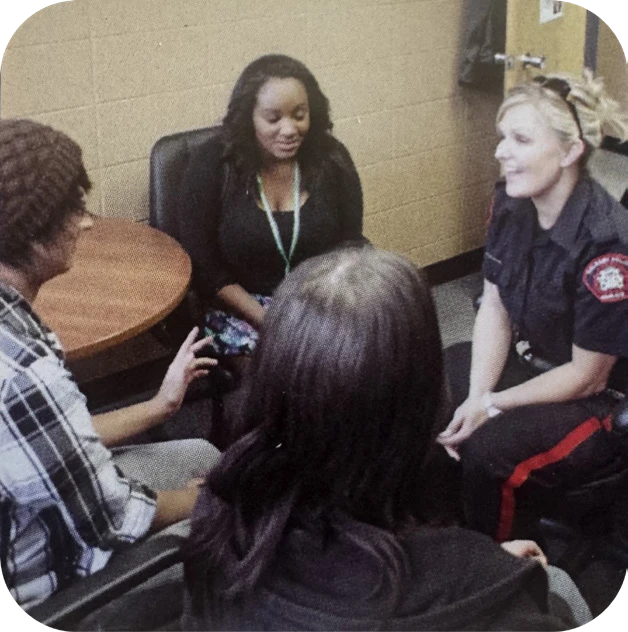
Carlamay is a former Calgary police officer and School Resource Officer, author and family conflict-resolution strategist.