



Practical Nutrition Strategies for Success
A healthy workplace benefits everyone—employees, clients, and the business itself. But what exactly makes a workplace healthy?
An unhealthy workplace is easy to spot: it’s physically detrimental, saps your energy, causes mental stress or sleep problems, lacks positive feedback, offers no work/life balance, and breeds toxicity.
As a Corporate Health Dietician, I believe your workplace can be a healthy environment where you thrive, not just survive.
“Healthy workplaces drive results: higher productivity, better employee retention, reduced sick leave, and stronger team loyalty.”
3 Ways to Build a Healthier Workplace
1. Provide Healthy Food Options
Healthy nutrition keeps blood sugar levels constant, improving energy, focus, mood and creative thinking. Does your office have a ‘cake culture’ with sugary treats, heavy food for lunch meetings, and vending machines full of soda and candy?
“Want to improve workplace productivity? Focus on lunch.”
Stock Healthy Vending Machines
We eat whatever is convenient. Replace pop and chips with sparkling water, nuts, dried fruit, and whole-grain crackers.
Walk the Talk
Ensure catered lunches include vegetables, whole grains, and protein-rich choices. Work with a Registered Dietitian to create an approved healthy catering menu.
Launch a Healthy Lunch Challenge
Post weekly recipes, lunch packing tips, and meal ideas on your intranet and in eating areas.

2. Invest in Nutrition Education
Prevent “hangry” (hungry + angry) and “hanxious” (hungry + anxious) employees. Businesses spend thousands on productivity systems while overlooking employee nutrition—the most basic solution to productivity.
Build an Education Program
Create an ongoing nutrition strategy with help from a Corporate Health Dietitian, including seminars, counselling, and video education.
Encourage Good Lunch Habits
Skipping lunch, packing unbalanced food options, or grabbing whatever is handy derails afternoon productivity.
Support Healthy Eating Out
Teach employees how to make better choices when buying lunch and ensuring meals contain carbohydrates for brain fuel, protein to sustain energy and plenty of fruits and vegetables for overall wellbeing.
3. Move More
Long periods of sitting increase the risk of heart disease, obesity, diabetes, and cancer. The World Health Organisation lists inactivity as the fourth biggest risk factor for global adult mortality.
Try Movable Meetings
Schedule walking meetings instead of sitting. Leadership must model this, so employees see it as acceptable practice.
Create a Break Room
Discourage eating at desks. Set up a work-free zone where employees can eat, de-stress, and recharge. Stock it with healthy snack and drink options.
Write a Movement Policy
A written policy shows employees their health matters. Provide standing desks, moving meetings, meditation breaks, stretch time-outs, and a movement-friendly dress code.
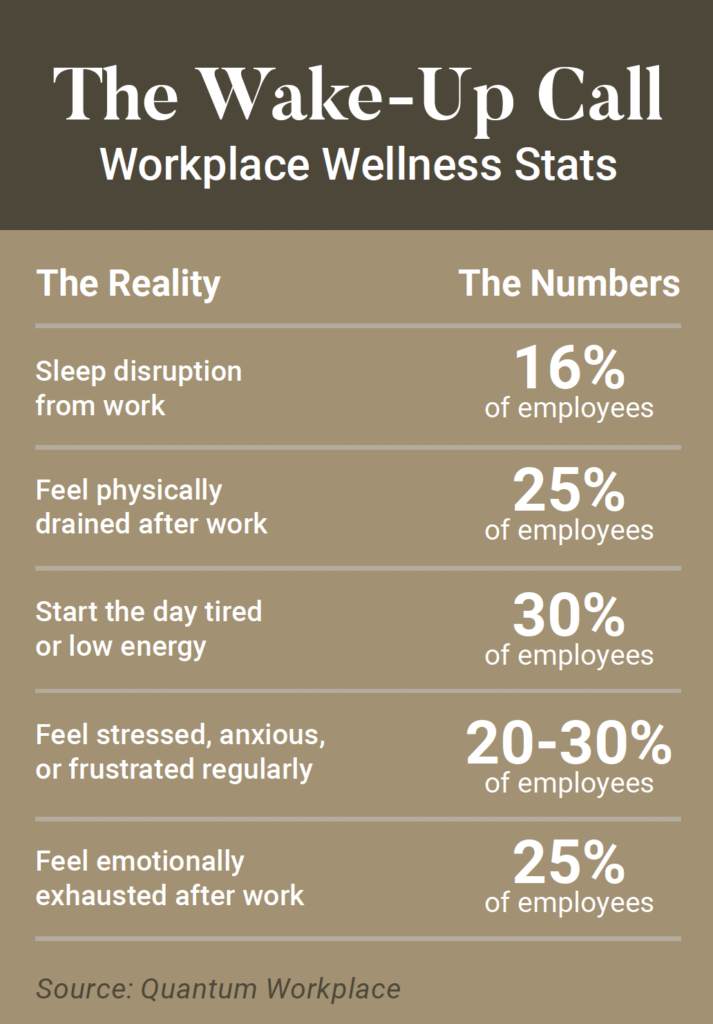
What is a Healthy Workplace?
“A healthy workplace is one where workers and managers collaborate to continually improve the health, safety and wellbeing of all workers and by doing this, sustain the productivity of the business.”
— World Health Organization

The Bottom Line
Healthy eating habits directly impact mental wellness and workplace performance. When employees feel safe, valued, and well-nourished, everyone wins. By creating supportive environments that prioritize nutrition and movement, companies invest in their greatest asset—their people.
Adapted from an Online Blog Post at
healthstandnutrition.com