


The New Frontier of Mental Health Care
In a world that is moving faster than ever, today’s daily pressures are taking a toll on mental well-being. Between constant digital connection that serves to isolate while blurring the boundaries between work and rest, economic burdens that cause stress and uncertainty, and the pressures of juggling multiple roles, a growing number of people are suffering from depression, anxiety and burnout. Practitioners like those at Active Sports Therapy (AST) are providing evidence-based solutions that unite physical rehabilitation and health with mental wellness, allowing their patients to feel stronger and healthier, inside and out.
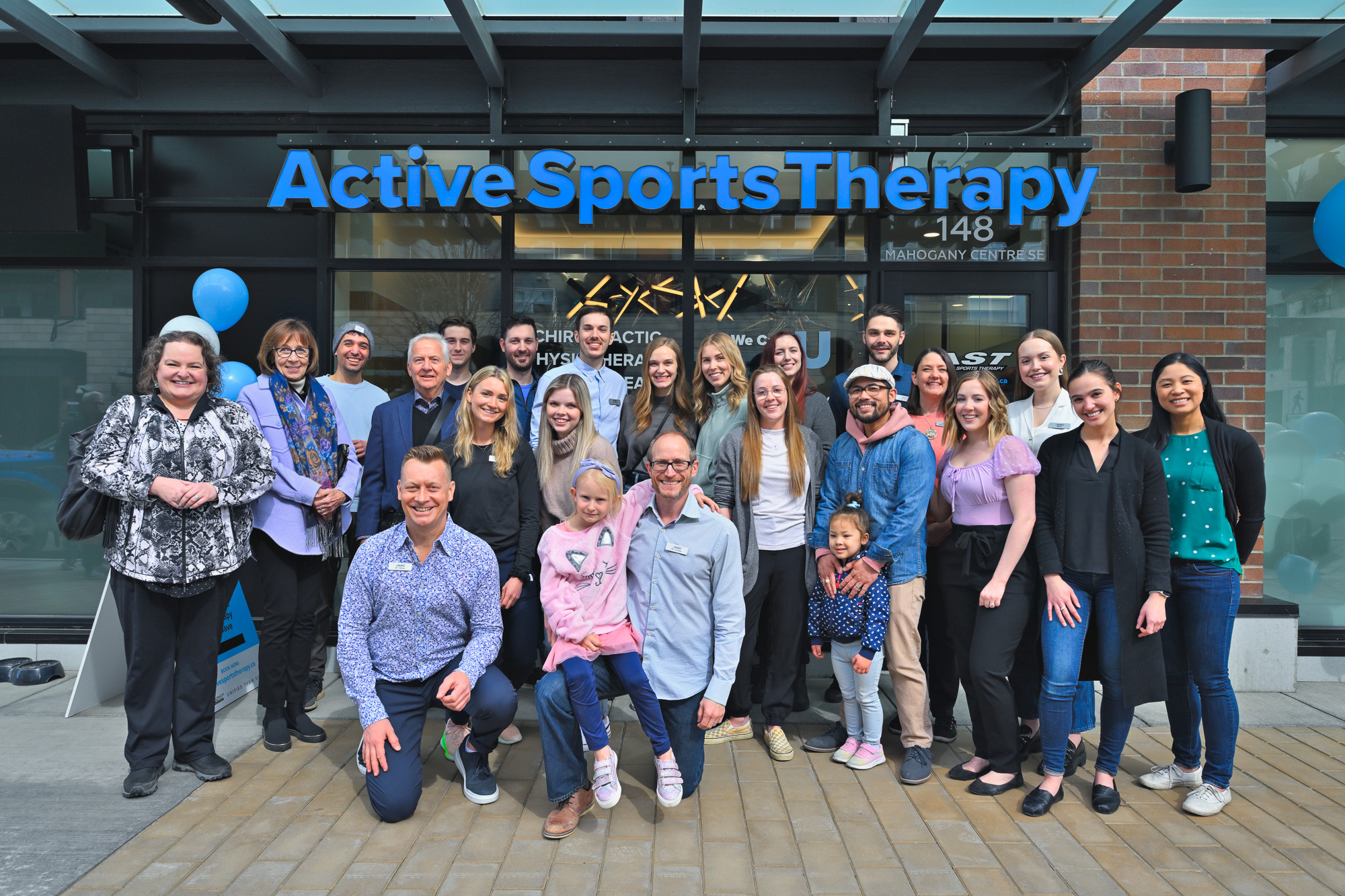
AST has been recognized for its multidisciplinary approach to injury recovery, enhanced athletic performance and whole-body care since it opened its doors in 2007. As a leader in integrated healthcare with a strong patient focus, it’s no surprise that the practice is pioneering a new standard of care where body and mind are treated as one.
“Mental health is a conversation topic that comes up all the time with our patients because we get to know them so well and we’ve seen their struggles.”
IMPORTANT MEDICAL INFORMATION
EXOMIND is an FDA-cleared medical device for the treatment of major depressive disorder (MDD) in adults who have not responded adequately to prior antidepressant medications. It has additional approvals from Health Canada and CE marking for treating depression, anxiety symptoms, obsessive-compulsive disorder, and excessive eating disorders.
EXOMIND is not intended to diagnose, treat, cure, or prevent any disease beyond its approved indications. This technology was newly released in 2025, and long-term data specific to EXOMIND is still emerging, though it builds on decades of established TMS (Transcranial Magnetic Stimulation) research.
Patients should consult with qualified healthcare professionals to determine if EXOMIND treatment is appropriate for their individual circumstances. EXOMIND is not suitable for everyone and requires medical screening. This article does not constitute medical advice.
This profile is sponsored content provided by Active Sports Therapy. Readers should conduct independent research and consult healthcare providers before pursuing any treatment.
“Our differentiator is unified team care. We work collectively for your benefit and draw on the knowledge of other practitioners to make sure you get the absolute best possible care,” says Dr. Dave Westmacott, chiropractor and President of AST.
With a foundation built on treating and preventing sports injuries, the clinic has evolved over the past nearly 20 years to include other professional services that allow people to not only get moving but to keep moving so they can maintain a healthy, active lifestyle. AST recently expanded its scope to include mental health treatment with the EXOMIND device, a modern TMS technology.
“Treatment-resistant” means conditions that haven’t improved adequately after trying at least two standard treatments—typically therapy and medication. EXOMIND is not a first or second-line treatment option. It’s designed for people who have already worked with mental health professionals and tried conventional approaches without sufficient relief. While AST does not provide psychological counselling services, the clinic strongly emphasizes that patients should maintain their therapeutic relationships with mental health professionals, continue any prescribed antidepressant medications, and use other evidence-based interventions.
As an adjunct treatment, EXOMIND may benefit various patient populations struggling with these treatment-resistant conditions such as major depressive disorder, anxiety symptoms, OCD (intrusive thoughts and compulsions), and excessive eating disorders. It’s designed to work alongside mental health treatments—particularly counseling and therapy—not replace them.
This FDA-cleared, Health Canada-approved and CE-marked device delivers treatment without medication. The treatment involves no pain and carries no risk of dependency. With no required downtime, sessions take under 30 minutes.
EXOMIND comfortably stimulates specific brain regions to promote neuroplasticity, helping to rebuild and strengthen neural pathways that support healthier emotional responses. At the same time, EXOMIND treatments may increase Brain-Derived Neurotrophic Factor (BDNF), a protein that nourishes neurons and supports new synaptic connections.
However, like all medical treatments, EXOMIND has limitations and is not suitable for everyone.
The device cannot be used by individuals with certain intracranial implants (such as cochlear implants) or those with seizure disorders. Common side effects may include mild scalp discomfort or short-lived headaches. Patients require medical screening before beginning treatment.
Treatments can have positive impacts on people’s mental health, but they are not a permanent cure. The AST team recommends six sessions over 3 to 6 weeks with follow-up appointments to monitor results and determine if additional treatments are needed to maintain benefits.
“Research on TMS technology shows that benefits can last six to 12 months for many patients, though individual results vary,” says Westmacott. “As EXOMIND is a newly released device, long-term data specific to this system is still emerging. We monitor our patients closely and schedule follow-up care as needed.”
Providing holistic care for patients sits at the core of the clinic, and Westmacott notes that his clinic is among the first in Calgary to offer this FDA-cleared device, which was released in early 2025. The clinic soft launched the technology in the summer and officially launched the service in November. A mental health treatment option rooted in decades of TMS research is an important resource that AST’s diverse group of health and wellness professionals can discuss with appropriate patients. The clinic has a team of more than 30 practitioners across two locations providing expert care in chiropractic, massage therapy, active release and physiotherapy, nutritional consultation, and naturopathic and traditional Chinese medicine.
As technology has progressed, AST has remained current, incorporating evidence-based approaches to better serve its clients.
“We’ve always been forward-thinking in treating our patients,” Dr. Westmacott says.
The clinic invested in EXOMIND based on the device’s regulatory clearances and the decades of clinical research supporting TMS technology for depression treatment. In addition, the clinic has an established relationship with EXOMIND’s manufacturer, BTL Industries, a medical and aesthetic equipment manufacturer. AST had already incorporated other BTL technologies into the practice.
“We research new technologies carefully before bringing them to our practice.”
AST also offers Shockwave Therapy to treat patients suffering from chronic pain that is unresponsive to traditional therapies. This technology uses acoustic waves to interact with tissue, supporting cell growth, tissue repair, pain relief and mobility restoration; Shockwave can also reduce inflammation, increase collagen production and break up calcium buildup. AST continues to grow and evolve as it evaluates effective technologies that can provide quality care for appropriate patients.
The clinic serves the community well, too. The AST team hosts an annual golf tournament to raise money for KidSport, is involved with National Bank Challenger tennis events and supports the Magic of Christmas. They also work with programs at the University of Calgary and Mount Royal University and bring in student interns so the AST team can offer mentorship to the next generation of practitioners.
“I think we’re doing a lot of the right things. We just want to make a difference in our community, create impact and add value,” says Dr. Westmacott.
The growing practice is working toward all three goals. As the demands of modern life continue to challenge both body and mind, AST is pairing trusted multidisciplinary care with evidence-based technologies like EXOMIND to support wellness: treating injuries, enhancing physical performance, supporting healthy lifestyles and now providing FDA-cleared mental health treatment options for appropriate patients. With this approach, Active Sports Therapy is positioning itself as a comprehensive integrated healthcare provider.
This profile is presented in partnership with Active Sports Therapy, an advertiser within this publication. The views and information presented reflect those of the sponsor.
EXOMIND is an FDA-cleared medical device that requires professional medical consultation and screening. It is approved for treating major depressive disorder in adults who have not responded adequately to antidepressant medications, with additional approvals for anxiety symptoms, obsessive-compulsive disorder, and excessive eating disorders. Treatment outcomes vary by individual.
The information in this article should not be considered medical advice. Readers experiencing mental health concerns should consult qualified mental health professionals to determine if EXOMIND or any TMS treatment is appropriate for your specific circumstances. Details and offerings are subject to change and should be verified with Active Sports Therapy.
EXOMIND and the Brain
The human brain is made up of three layers that are tasked with different functions: the brainstem (automatic functions), the limbic system (emotion and homeostasis) and the cerebral cortex (thinking, movement and sensory processing). One particularly important region for mental health in the upper, outer section of the cerebral cortex is the dorsolateral prefrontal cortex (DLPFC) which helps regulate emotion, memory, attention and reward pathways.
At the cellular level, the brain is composed of billions of neurons, which are specialized brain cells that send electrical and chemical signals across synapses. Strong synaptic connections help the brain transmit information quickly and stay resilient. When these connections weaken, as seen in people with conditions including depression and addiction, mental and cognitive health can decline.
EXOMIND devices help address this decline through repetitive Transcranial Magnetic Stimulation (rTMS) to promote the brain’s neuroplasticity. This is its ability to reorganize and strengthen its networks in response to experiences, learning or therapy. Neurotrophins, the proteins that support neuron growth, can be boosted by healthy habits like good sleep, exercise and nutrition, while aging, trauma and stress can reduce it. EXOMIND introduces a specialized form of rTMS called ExoTMS, which gradually delivers gentler ramp-up electromagnetic pulses instead of standard rectangular ones, potentially helping patients better adapt to the treatment while still promoting the neural changes associated with improved mood and cognitive function.
In mental health treatment, especially depression, high-frequency TMS applied to the left DLPFC or low-frequency stimulation of the right DLPFC may help rebalance brain activity, influence neurotransmitters like dopamine, GABA and glutamate, and strengthen connectivity between brain regions.
Clinical Note: This information describes the theoretical mechanism of action. Individual treatment outcomes vary, and patients should discuss their specific situation with qualified healthcare providers.
Understanding TMS Research & AST Services
About TMS Technology
First FDA approval
2008 for treatment-resistant major depressive disorder
Research base
Decades of clinical studies on rTMS for depression
Established protocol
Multiple FDA-cleared TMS devices now available
Sustained remission
Research on TMS generally shows approximately 58% sustained remission rate at 12 months (individual results vary)
Common side effects
Mild scalp discomfort (approximately 15% of patients) or short-lived headache (approximately 10% of patients)
Treatment duration
Typically 6 sessions recommended, with follow-up monitoring
EXOMIND Specific
Regulatory status
FDA-cleared for major depressive disorder; Health Canada and CE-marked for depression, anxiety symptoms, OCD, and excessive eating disorders
Release date
January 2025
Long-term data
Still emerging for this specific device; builds on established TMS research
Session length
Approximately 24.5 minutes once or twice per week
If you or someone you know is in crisis, please contact:
- Crisis Services Canada: 1-833-456-4566 (24/7)
- Kids Help Phone: 1-800-668-6868 (24/7)
- Talk Suicide Canada: 1-833-456-4566 (24/7)