


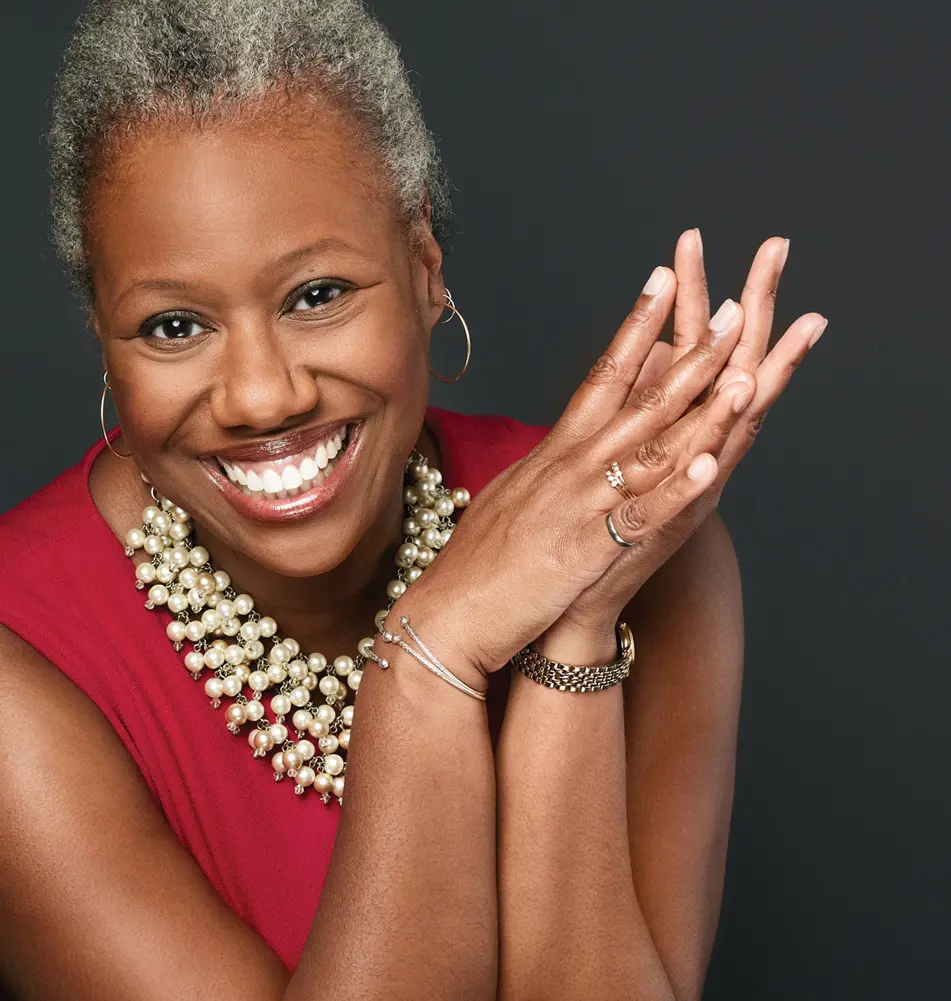
Heather Campbell is an accomplished professional. She’s an engineer with a Master’s in Law, she sits on industry boards, and she champions innovation in clean technology and energy transition. That is what she does. But it’s not who she is.
Who she is at her core is an advocate and an ally, a friend and a citizen of the world who wants to make it better for everyone.
On any given day, Heather travels between vastly different worlds. One minute, she’s deep in conversation about sustainability, inclusion and the future of energy. The next, she’s immersed in Calgary’s arts community, feeding her soul and spirit. She sits on the board of the Werklund Centre, a performing arts facility in Calgary, and describes herself as an amateur artist, musician and performer. For Heather, art is more than a pastime. She believes that art heals.
“It is the place where my brain and my soul and my spirit go when I need to heal from the chaos and pain and hate and harm and harassment that is so active and enabled and empowered and normalized in today’s world,” Heather says.
And then, sometimes she is doing something much heavier; she is showing up for a friend or community member in crisis, equipped not only with compassion but with the tools to help keep someone alive.
Turning Care into Action
Earlier this year, Heather’s close friend attempted suicide. The experience was a turning point. She already had first aid training. She knows how to respond to physical emergencies, perform CPR and restore a heartbeat with an AED. But mental health requires a totally different preparedness, and Heather realized she didn’t have the skills to help her friend, or others struggling with their mental health.
Choosing action over helplessness, she sought out training through Canadian Mental Health Association Alberta and the Centre for Suicide Prevention to fill her knowledge gap. In a two-day workshop, Heather learned how to recognize flags that indicate suicidal ideation, how to ask direct and often uncomfortable questions, and how to guide someone toward immediate help. The training gave her insights into managing her relationship with her friend. It also provided her with the comfort of knowing she could intervene to help someone in crisis in the community.
What she found most empowering was this: it doesn’t take a clinician to make a meaningful difference in someone’s life.

“You don’t need to be a medical doctor,” Heather says. “You can just be a friend, a contributor, a resource. Or you can just listen. You can just be that person who says, ‘you’re not okay right now, so I’m not going to leave you alone. I’m going to make sure that you’re safe.’”
Many people don’t know what to say to someone with suicidal thoughts so they don’t say anything at all. The workshop showed her that there is no wrong thing to say to pull someone away from the edge. Just let them know you’re there.
Mental Health is Health Care
In the aftermath of her friend’s attempt, Heather sought counseling to process what she had experienced. That decision revealed something deeply frustrating about the system. While physical health is broadly covered, mental health supports often come with strict limits. Heather knows this contrast firsthand. As someone undergoing cancer treatment herself, she has access to psychosocial oncology support. Her counselling and support groups surrounding her cancer treatment are fully integrated into her care and covered by her health plan. But coping with mental illness or supporting those who are? Patients are essentially on their own.
“Why is it that psychological treatment is not treated as healthcare?” she asks. “There’s an absolute disconnect in the way that we, as a society, treat mental health as some sort of distinctive, cordoned off section of health. It’s like somehow my health stops somewhere above my eyebrows, at my brain. It makes no sense to me.”
In a time when stress, uncertainty and isolation are increasingly common, the gap feels even wider. For many, accessing mental health care means making difficult trade-offs between support and groceries or rent.
Despite these barriers, Heather has become the steady beacon of support for those around her. Whether someone is struggling with mental illness, facing racism or navigating the stigma of suicide, Heather shows up, ready to listen and ready to help.
Advocacy in Action
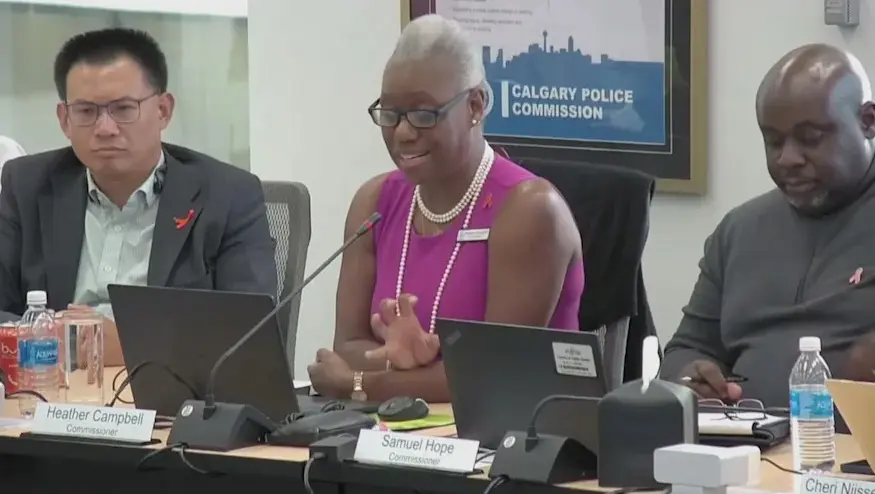
Heather’s commitment to people extends beyond her personal relationships. During her four years as a Commissioner with the Calgary Police Commission, she saw how complex social issues are often oversimplified. This is especially true when addressing the unhoused population. Homelessness, mental illness, substance use and minor crime are often unfairly lumped together. She emphasizes that these are distinct challenges that deserve compassionate responses rather than blanket assumptions or criminalization.
Her approach is the same when addressing unhoused populations as it is for suicide intervention: pay attention to people. Don’t just walk by. Reach out. Ask if they are okay. And if the answer is no, be willing to engage and find a way to help.
For Heather, meaningful change starts with seeing the whole person. Not a label or stereotype but a human being with a story. It also requires humility. After all, so many people are only a few difficult circumstances away from finding themselves in the unhoused person’s shoes.
“You don’t need to be a medical doctor. You can just be a friend, a contributor, a resource. Or you can just listen. You can just be that person who says, ‘you’re not okay right now, so I’m not going to leave you alone.’”
Redefining Adult Wellness
Heather is fiercely compassionate. She wakes up thankful to be gifted another day and chooses to use it advocating for her community. She is not one to rest on her laurels, preferring to face new challenges head on. Advocacy isn’t something she switches on and off. It’s how she moves through the world every day, ready to jump each new hurdle. There is too much at stake to do otherwise.
“These things that are happening are happening to people that I love. The things that are happening are happening to people that look like me. The things that are happening are happening to people. They’re happening to people,” she says.
But even the most committed advocates need to care for themselves. For Heather, adult wellness is about learning to do just that, and without guilt. It means recognizing when to rest, setting boundaries and getting help when she needs it. And it means understanding that prioritizing her health is not selfish. It’s critical.
“It means that I’m here to do the things that I want to do and to care for the people that I love. I can’t do the things I need to do if I’m not well,” she says.
In a culture that celebrates pushing through exhaustion and ignoring pain and stress, this mindset is quietly radical. So is Heather’s willingness to learn, to show up, and keep going. Adult wellness, as she lives it, isn’t a destination. It’s a practice that is found in small, intentional choices, whether that’s taking a nap, excusing herself from an event when she’s feeling drained or checking in on someone who might be struggling.
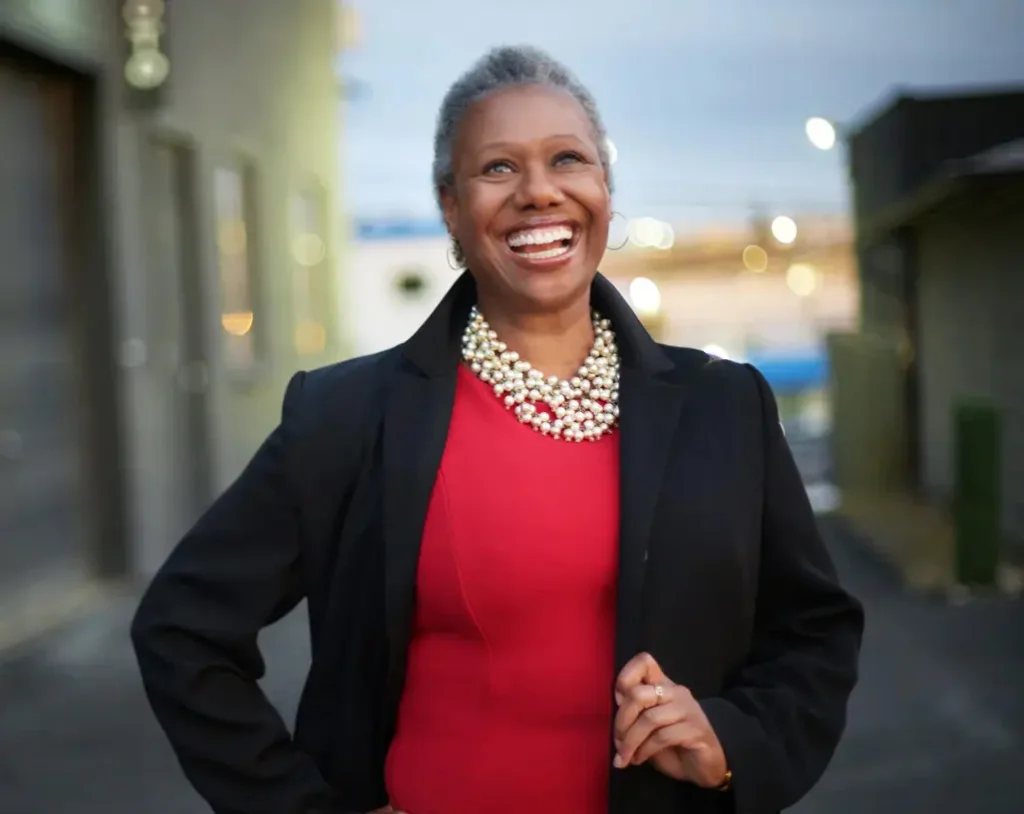
It’s also found in joy: in art, community and moments of connection that remind us why care matters in the first place.
In an overwhelming world, Heather Campbell’s approach is simple yet profound. Pay attention, stay present, take care of yourself and don’t underestimate the impact of showing up for others. Sometimes that is all it takes to keep someone here.