


The intake form asked me to list every treatment I’d tried, as if recovery were a checklist and I felt like I had somehow failed to complete it properly.
I ran out of space halfway through.
SSRIs. SNRIs. Mood stabilizers. Cognitive behavioral therapy. EMDR. Exposure therapy. Mindfulness retreats where I learned how to breathe but not how to stay. I wrote smaller and smaller, compressing years into margins, until the words blurred into something unreadable—like everything else in my head.
At the bottom of the page, there was a new line: reason for seeking Ketamine-Assisted Therapy.
I stared at it longer than I expected.
Hope felt like too strong a word. Desperation felt too sharp, too easy to dismiss. What I actually felt was quieter than both—something like exhaustion with a pulse. The kind that doesn’t ask, Will this work? but instead whispers, What if this is the thing I haven’t tried yet?
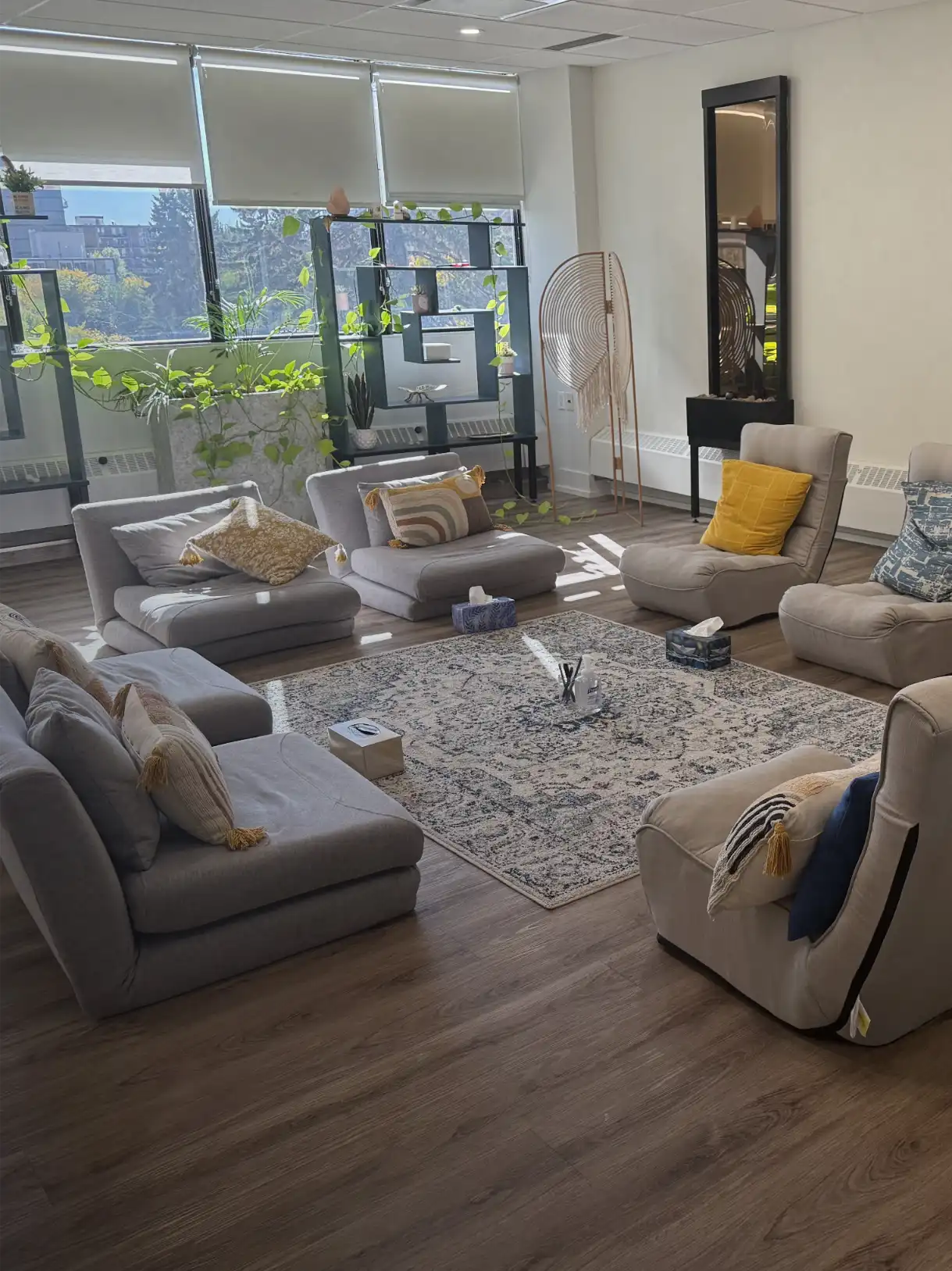
The clinic didn’t look how I imagined. No cold white walls, no sterile scent of failure. The space had themed wallpaper with comfy cushions, soft lighting, and plants that wrapped around the room in a warm embrace. A blanket sat folded with the kind of care that suggested someone expected me to need it.
“Before we begin,” the therapist said, “what would you like to let go of?”
It was a simple question.
Too simple.
Because the truth was, I didn’t know where the illness ended and I began.
About Ketamine-Assisted Therapy at Bloom
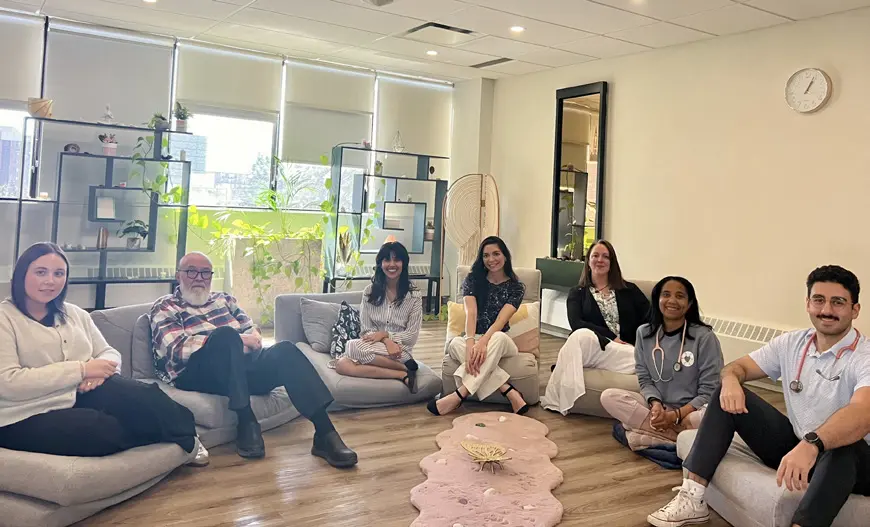
We have witnessed several stories just like this one, each with its own plot, main character and presenting concern. At Bloom Institute of Mental Health and Wellness, our Ketamine Assisted Therapy program supports folks who have treatment resistant conditions such as depression, anxiety, and trauma in living fuller more meaningful lives. Ketamine is a fast-acting synthetic pharmaceutical compound classified as a dissociative anesthetic. It is one of the most widely used drugs in modern medicine and is on the World Health Organization’s lists of essential medicines. In the last two decades ketamine has been increasingly applied in a clinical setting as an off-label treatment.
How the Treatment Works
At Bloom we believe that the mind and body are deeply connected and that every person has the chance to thrive. We trust in the power of combining science, psychotherapy and compassion. At the clinic we offer a combination of individual and group programming with consistent therapeutic providers and a combination of psychedelic (high dose) and psycholytic (low dose) treatments. Research from Mayo Clinic has shown a 70% response rate to ketamine in patients with treatment resistant conditions and that the psychological effects of an altered perception may further assist in breaking the cycle of negative thought patterns. This offers a new perspective resulting in significant mood improvements. Ketamine Assisted Therapy may be one of the most difficult decisions you may make in your life and perhaps it might just be the one thing you just haven’t tried yet…?
Natasha is currently the Director of Therapy at Bloom Institute of Mental Health and Wellness. Her Master’s degrees in Cognitive Science and Clinical Social Work have supported her impact across a multitude of areas, including corrections, crisis intervention, psychosis and mood disorders, chronic homelessness, non-profit management, individual, couples and family therapy, owning her own private practice and practicing psychedelic medicine. Her journey has been vast and humbling and her calling is now to share this information with all of you.
Key Takeaways
- Treatment-resistant doesn’t mean untreatable. When standard options like SSRIs, SNRIs, and various forms of psychotherapy haven’t provided relief, other medically supervised paths may exist.
- Ketamine-Assisted Therapy is a clinical treatment, not a self-directed one. It’s administered under psychiatric guidance and medical supervision, and it’s a decision to make with a qualified provider.
- Mayo Clinic reports response rates as high as 70% in clinical trials for treatment-resistant depression, with symptom relief that can begin within hours to days rather than the weeks typical of standard antidepressants.
- If you’re exhausted by trying treatment after treatment, that exhaustion is worth naming to a provider. Ask about the full range of options available to you, including newer approaches like ketamine-assisted therapy.
Editorial guidance for Family Psychology Magazine’s health and wellness coverage is provided by our Advisory Board of licensed mental health and wellness professionals.