



If there is one thing Jayme Minor loves, it’s the limelight. Whether as an athlete, musician, entertainer or top salesman, Jayme has always had the charisma and confidence to command attention. He drew people in with his larger-than-life personality and relentless drive to succeed. By all accounts, he was building a bright future.
But behind that image lurked a struggle with addiction, unresolved grief, anxiety and emotional pain that nearly cost him his life. It took him hitting rock bottom before he was finally able to accept help. Today, through sober community events, public speaking, social media and music, Jayme has transformed some of the darkest experiences of his life into a mission to help others.
His story is not one of overnight transformation. It is a story of years of escalating substance use, repeated relapses, devastating loss and ultimately learning that recovery requires more than quitting alcohol or drugs. It requires hard work and healing to make sobriety stick.
Today, through sober community events, public speaking, social media and music, Jayme has transformed some of the darkest experiences of his life into a mission to help others.

The Early Search for More
From a young age, Jayme craved more: more attention, more excitement, more fun. He was the charismatic teenager who was always up for anything, and his search for stimulation took a new direction in junior high when Jayme and his friends experimented with marijuana at a sleepover. While his buddies thought it was fun, they weren’t in a hurry to do it again. Jayme immediately wanted more.
“It started to escalate, doing drugs in the middle of the day, not just on the weekend and not just when there’s not a chance that our parents will find out. I was ready to take risks to get high again,” Jayme says.
By high school, his drug use was getting him into trouble. He was suspended from school and left off athletic teams because of his reputation. Instead of asking what he was feeling that made him turn to drugs, the adults around him focused on punishment – so nothing changed.
Despite his growing substance use, Jayme continued to function well. He graduated, maintained friendships and continued to be the centre of attention wherever he went. He also discovered a talent for sales and found he loved the work. His engaging personality made him an instant success, and he celebrated that success with drugs and alcohol.
“I partied every night with my friends, and I thought that was normal for 18 to 20 year olds 20 years ago. Looking back, I didn’t realize how dangerous of a dependency I was creating,” Jayme says. “When you’re having fun, when life is going great, you’ll probably be fine. But if something bad happens, your brain is going to reach for that thing that makes you feel better.”
Losses Changed Everything
And when bad things happened, what made him feel better was drugs and alcohol. The first major blow came when a long-term relationship ended unexpectedly. He had bought a house for the future he imagined they would share, only to watch it disappear. Then came a toxic workplace situation: a company merger brought in a manager with whom Jayme had a deeply adversarial relationship. The stress and anxiety became overwhelming.

To cope, his alcohol consumption increased. Marijuana gave way to cocaine.
Concerned about where his life was heading, Jayme sought out counselling and professional support — the kind of support available to Albertans through resources like the Alberta Health Services Addiction & Mental Health helpline. He had made some progress when tragedy struck. His best friend drowned, and the grief was crushing.
Unable to process the loss, Jayme returned to the only coping mechanisms he knew. Drugs and alcohol numbed the pain, but accelerated his decline. At the same time, workplace stress continued to mount; he eventually went on stress leave and lost the job he loved, a job he had held for 16 years.
The combination of grief, unemployment and addiction proved disastrous.
“I was waking up and drinking from leftover beer bottles until the liquor store opened. I was having panic attacks from the cocaine. I was hiding from people, lying to people,” he says.
His parents frequently found him passed out and brought him home to recover, and friends and family repeatedly stepped in to help. A former client turned friend and business partner, Adam Jones, stood by him through the chaos, promising he would have a place to land once he got healthy.
Jayme tried to do his part. He attended AA meetings, counselling sessions and recovery programs. He would stay sober, slip and start over again.
Rock Bottom
Jayme’s lowest point came after a camping trip with friends. He initially stayed sober but felt like he was pretending. He returned for another night and decided a few drinks to loosen up wouldn’t hurt. A few drinks became a full relapse. The next morning, Jayme woke up in his car in withdrawal. He drove to a liquor store and began drinking while driving home.
“I remember thinking I didn’t care. I was driving my car fast, swerving, with this manic laugh. And I got pulled over. How many times had I driven drunk, and it finally happened,” he says.
After being charged with impaired driving, Jayme returned home convinced his life was over. Overwhelmed by shame and hopelessness, he bought enough alcohol to end his life. But a concerned friend checked on him, shocked by what he found. For years, people had encouraged Jayme to go to rehab. He always refused, viewing treatment as a sign of failure, an embarrassment he couldn’t face. But this time, Jayme said yes.
Learning to Heal
Entering treatment became the turning point that none of his previous attempts at sobriety had achieved. For the first time, Jayme focused completely on himself and began working on his mental and physical health. He began confronting the grief, trauma and emotional wounds that addiction had masked for years. He learned that on top of abstinence, recovery required him to understand why he drank in the first place.
“If you’ve never relapsed from drugs or alcohol, it’s like a piece of your soul gets torn apart every time. It’s so destructive on your mental and physical health. And you’re helpless. You just keep doing it,” he says.
One counsellor saw potential in him beyond his recovery. “She said ‘You have an unbelievable natural ability to connect with people and inspire them. I think you can change things.’ So once I got out of rehab, I did just that,” he says.
After completing the two-month program, Jayme slowly rebuilt his life. He set firm boundaries, avoided environments tied to drinking and became fiercely protective of his mental health, emotional wellbeing and sobriety. He gradually returned to work full-time with Adam, and he also learned how to create music and perform sober. Finally, recovery felt sustainable.
Creating Community Through Recovery
Jayme did the work of healing and wanted to help others thrive while sober. He considered how he could use his experiences to help others. The answer came through community events, music and advocacy.
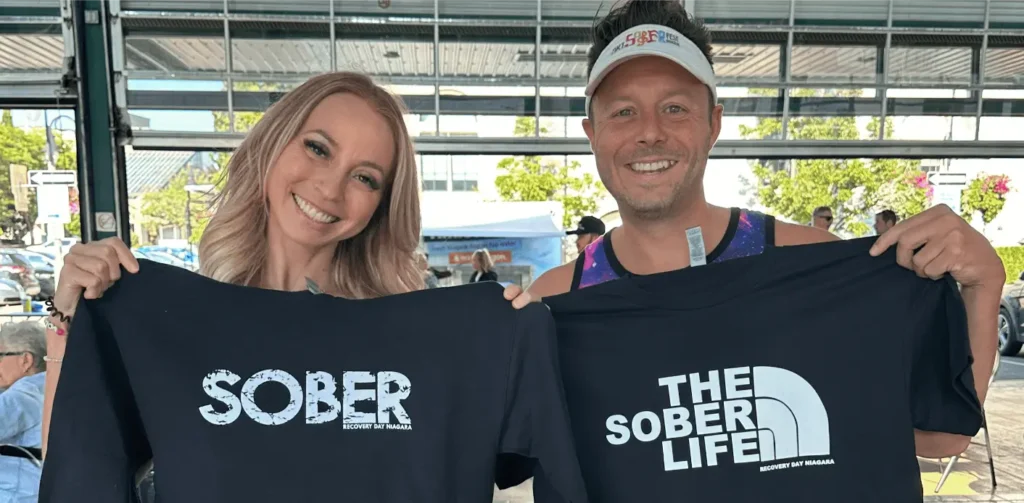
He hired a talented team to help him produce his music and videos, much of which has a recovery theme, and found the courage to release it. In 2022, Jayme hosted his first “OktSoberfest,” a sober social event designed to show people they could connect, celebrate and have fun without alcohol. A second event followed the next year.
While the early festivals focused heavily on addiction awareness and fundraising, Jayme eventually shifted toward creating broader community experiences. The events remained alcohol-free but the emphasis moved to family, connection and belonging. An all-ages afternoon event at Ranchman’s nightclub in 2023 proved especially successful and he has put on several more events over the past few years.
Entering treatment became the turning point that none of his previous attempts at sobriety had achieved. For the first time, Jayme focused completely on himself and began working on his mental and physical health.
“The number of people, families and kids, that came was unreal. It was about them. I played the music they wanted to hear. I let them dance and enjoy themselves. I was on stage and did a bit of talking and a couple of my own songs, but I let them do their thing,” Jayme says.
Whether hosting dance parties or free family Christmas celebrations like Elves Off the Shelves, Jayme created warm, inclusive events that benefitted those struggling to stay sober as well as families who didn’t have the money for entertainment.
The events reinforced an important lesson for Jayme: recovery is not just about removing substances from people’s lives. It is about helping them build meaningful experiences to replace them.

Reaching Out
The performer in Jayme wasn’t dulled by addiction or by recovery. Today he can still be found on stage in bright outfits, trumpet and microphone in hand. Through music, videos and public speaking, he uses his experiences to connect with others.
His growing online presence has also attracted criticism. He receives a lot of hate online, especially from men threatened by his confidence and strength. It doesn’t discourage him, and he continues to be a positive inspiration in the community.
“I’ve had people tell me to relapse and die. No one says that if their life is good. I know that hurt people hurt people,” says Jayme.

Rather than respond with anger, he responds with compassion, occasionally helping these posters access counselling support. That commitment extends beyond social media. Through their business MAXgreen Windows, Siding and Roofing, Jayme and Adam fund counselling sessions for people who otherwise could not afford them. They both know firsthand how important it is to have access to mental health support before a crisis hits.

Jayme also works to reach people before there is trouble through his “Just Say Yes” presentation. Combining entertainment with honest conversations about addiction, anxiety, grief and self-confidence, the presentations encourage junior high students to make healthy choices and seek help when they need it. His authenticity resonates with teens because he speaks openly about his own struggles and insecurities.
Recovery into the Future
At 42, Jayme is living his best life. He’s marrying the love of his life this summer. He has a fulfilling, meaningful job, a strong recovery foundation and a growing platform for helping others. After everything he has been through, his message is simple: be honest. The first step is to ask yourself tough questions: whether you are truly happy, what causes your pain and how you cope.
“The next step is to ask for help. You’d be amazed at how many people will help you if you ask,” he says. “I love setting someone up to get help. There’s no better high, and I’ve tried all the other highs,” he says.
For Jayme Minor, recovery began when he finally stopped running from difficult questions. Today, his mission is to help others find the courage to ask them too so they can begin healing.
Key Takeaways
- Recovery is rarely linear — Jayme’s path involved years of relapse before treatment finally worked, and setbacks don’t mean recovery has failed.
- Addiction often masks unresolved grief and trauma. Lasting recovery required Jayme to address the underlying pain, not just stop using substances.
- Support doesn’t have to wait for a crisis. Alberta families can reach services like the Alberta Health Services Addiction & Mental Health helpline before things escalate.
- Purpose can grow out of pain. Jayme now funds counselling for others through his business and speaks to junior high students through his “Just Say Yes” presentations.
Editorial guidance for Family Psychology Magazine’s health and wellness coverage is provided by our Advisory Board of licensed mental health and wellness professionals.