


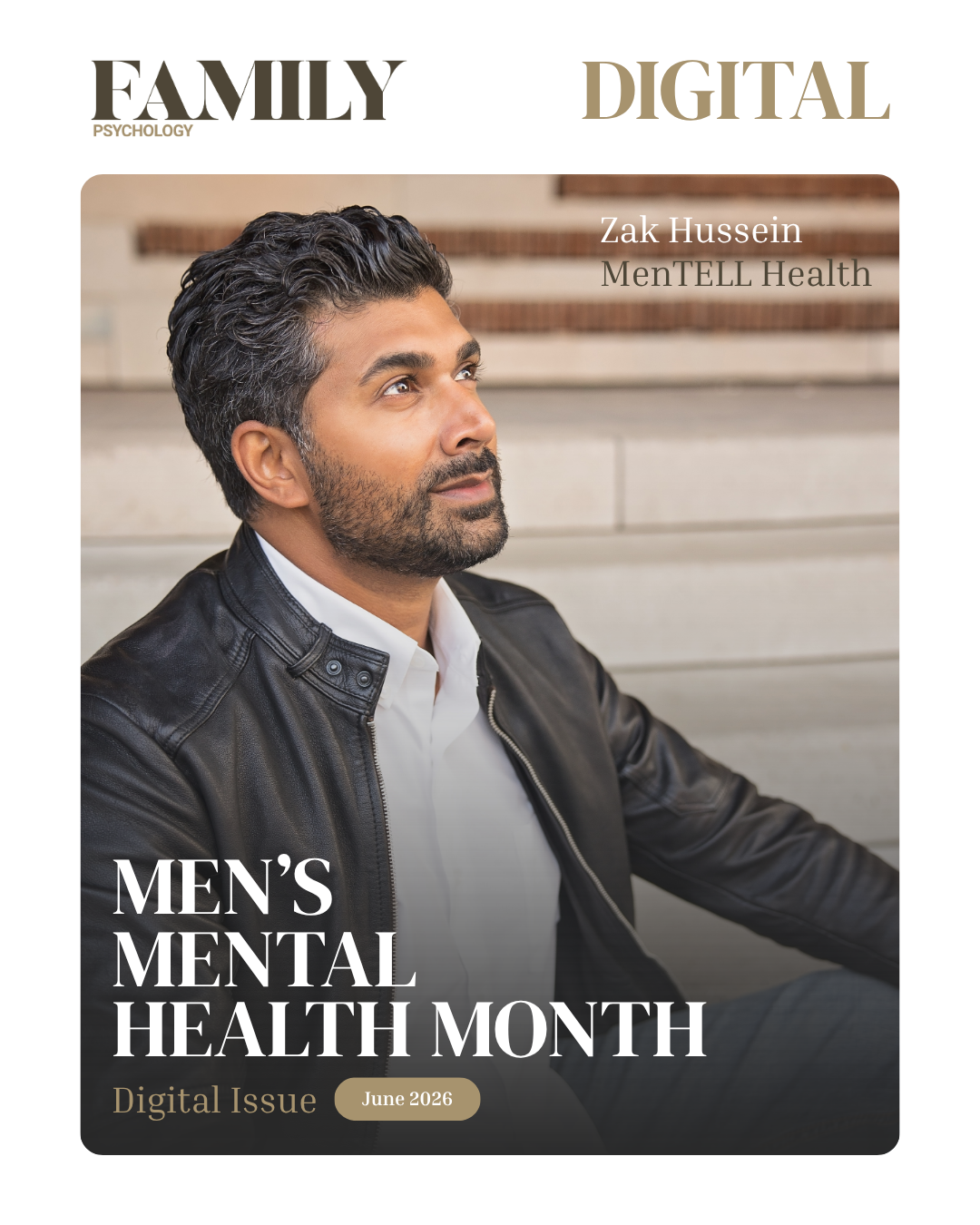
Zak Hussein is a professional entrepreneur working across the fields of technology, media, digital strategy, and AI. He is the founder and host of CanadianPodcast.ca, and the founder of MenTELL, a national movement centered around connection, conversation, and support for men’s mental health.
When MenTELL started in 2023, Zak worked alongside friend Shaun Taylor and a small group of ambassadors and supporters from all walks of life. He says MenTELL started from a very real place, where he saw how men around him carried pressure, stress, loneliness, and emotional weight – without feeling like they had a place to talk about it.
“A lot of conversations around men’s mental health either felt overly clinical or disconnected from how many men actually communicate and connect in everyday life,” Zak explains. “There was a gap between awareness and real human connection.”
MenTELL is a Calgary-founded Canadian movement focused on raising awareness around men’s mental health. Now entering its fourth year, MenTELL shares content, conversations, and community initiatives year-round – but really kicks off each June for Men’s Mental Health Month Canada, where the movement brings its energy, voices, and community together nationally.
MenTELL is Building Space for Men to Feel Seen and Supported
Using digital storytelling, media campaigns, community partnerships and initiatives like #BeTheFlare, MenTELL creates an approachable space for real connection. The #BeTheFlare campaign asks people to film a short video answering one question: “what would you tell your younger self?”
Zak says the prompt was chosen because what has once helped you, may help others – and your words might help someone else light the way forward.
“MenTELL encourages people to check in on one another,” Zak says. “To me, it represents everyday men from all walks of life across Canada coming together to break the stigma, shatter the silence, and support one another in real, human ways.”
Zak says many men grow up believing that they need to carry everything themselves. He says many of them are taught to suppress their emotions, avoid vulnerability, or fear asking for help. When they want connection, they express it differently – like on the golf course, in a garage, on a hike, or during a long drive.
“Creating more approachable spaces and conversations is incredibly important,” he explains. “Many men do want connection and support.”
What was once a grassroots idea has rapidly grown, with MenTELL campaigns now generating hundreds of thousands of impressions on social media. The campaign reaches a predominantly male audience, which shows Zak that the message is reaching the people it’s meant to reach.
“Men from completely different walks of life come together around the same message,” Zak explains. “This has stayed with me. It showed me how universal this really is. People may have different backgrounds, jobs, communities, and stories, but so many are carrying something and looking for a place to feel seen.”
From Conversation to Community
Born in Tanzania, East Africa, Zak is a Calgarian at heart. He moved to Calgary at just four months old, and now considers himself both Calgarian and Albertan. His love for the geography of the area – the Canadian Rockies, Alberta’s rolling foothills, the open prairies, and the history and heritage of the West – continues to shape his storytelling and ability to connect with people from all walks of life.
“In the beginning, MenTELL started as an idea rooted in awareness and conversation,” he explains. “Today it feels much bigger than that.”
Zak is planning to continue growing MenTELL into a national movement, reshaping how conversations around men’s mental health and emotional well-being happen in Canada.
“I want it to become something people participate in, contribute to and carry forward within their own communities, not only in June but throughout the year.”
Zak says he hopes MenTELL becomes a bridge for men across Canada, helping to eliminate stigma, encourage real conversations, and remind men that there is no shame in speaking up, or finding support.
“You do not have to carry everything alone,” he says. “There is no shame in speaking up, reaching out, or finding support.”
Even small conversations can change someone’s direction more than we realize – and you too can be a light in the darkness for someone else.